17.3.13

Siem Reap to Battambang by boat

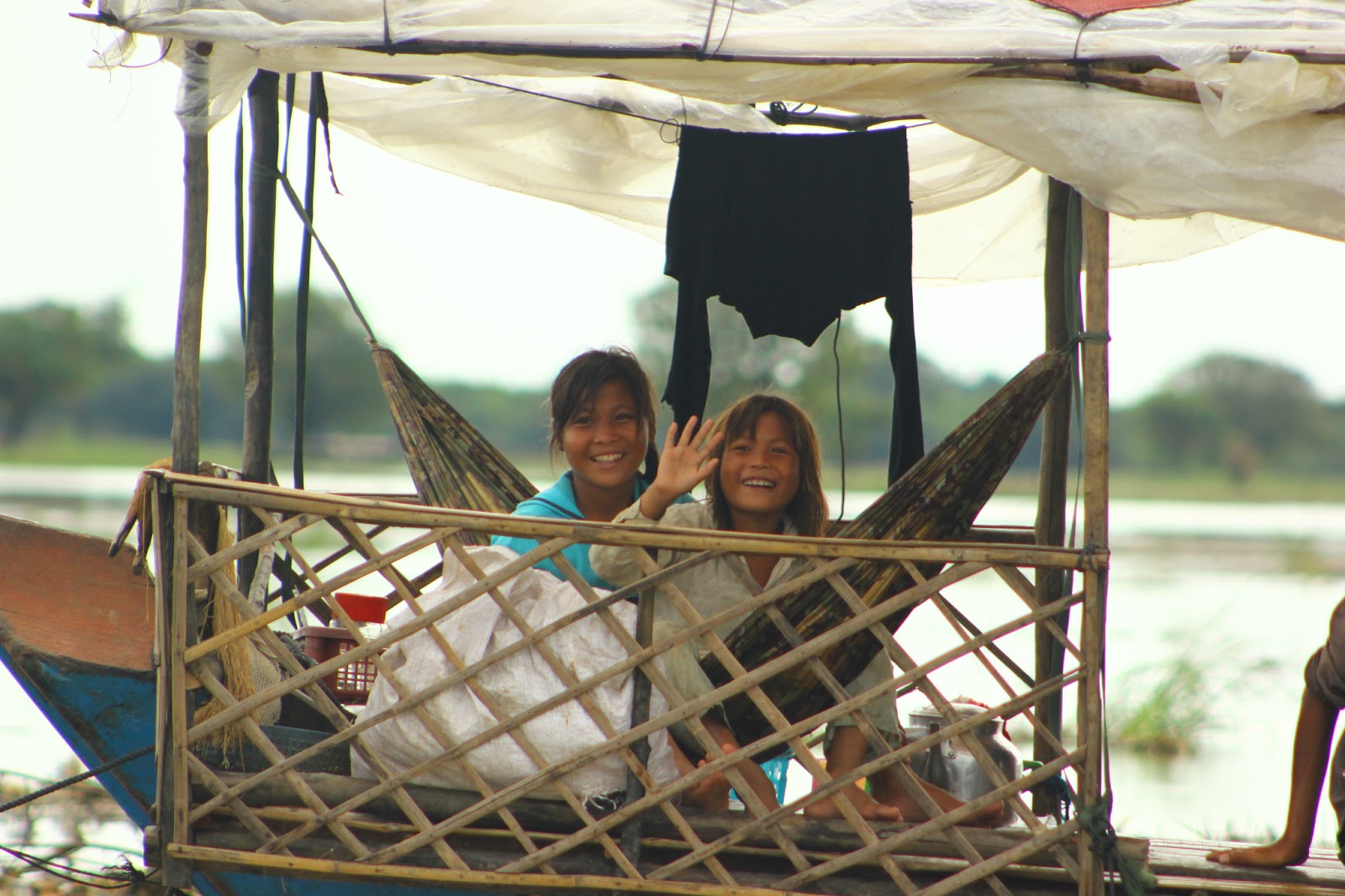
Floating village on Tonle Sap Lake


On going home...

As my journey drew to a close and the realisation that I would be home in less than a week set in, I began to feel pretty depressed. Trying to focus on all the amazing experiences I had managed to stave this off somewhat. More importantly through sheer chance, I bumped into some friends from the Ha Long Bay tour I’d made nearly 2 months earlier. They just happened to be staying in the same hotel as me, here in southern Cambodia. Great timing! Seeing a few friendly faces and meeting some great new people gave the last few days a new lease of life and eased me out of the homeward bound blues. But soon enough it was time to part ways, me and a fellow traveller made the gruelling 16 hour bus journey from Sihanoukville across the Cambodia/Thai border and up to Bangkok. Having someone who was also heading home to make the journey with made the mission a whole lot more bearable as we reminisced and discussed travel and everything else that came up. Accidently booking into a swanky hotel that was way out of our price range made it a memorable last night too, after a simple meal with temporary friends made on the bus journey, back on Khao San road again.

I spent the very last day alone in Khao San, letting the hipster-travel crowd bustle around me, marinating in the sizzle and steam of street food, watching the hustlers, drunks and families, the sultry thai ladies that beckon you into the bars, the booming music, the laughter and shouts all blended into some sort of liquid effervescence that carried me forward and soothed my spirits. I was ready to come home.

Two flights, three airports and many hours later, I arrived back home. Meeting my parents at Heathrow, I stepped out into the blasting chill of England in December. My first taste of fast food in nearly 3 months. Where are all the Asian people? The street food? Temples? Monks? Any beaches? Jungle? No? This would take some getting used to. Returning home was utterly bizarre in its familiarity, meeting up with my friends for the first time a totally surreal experience, more so than anything that happened to me a life away on the other side of the planet.
A few weeks later a friend would make the great point that coming home is more of a culture shock than arriving in some strange foreign land. Spot on really. It took weeks to acclimatise, going back to work in a factory was bleak. The dreary sludge of sledgehammer mornings. The grey. The cold. God, I wanted to go back. Plans were made to return as soon as possible. Myanmar echoes in my future. The smells, the heat, the sweat. Babbling voices in an unintelligible language I’ve never heard before call me forward.

This is the story of my journey. I’ve missed out loads, but it’s all in my head somewhere. I’ll carry it as long as my mind works. If you want to hear more, ask me. If you’re still reading, thanks.  

15.3.13

Angkor Part 2

Angkor Wat sunrise day 2


Entrance to Ta Prohm temple at Angkor.


Just in case you think I went reclusive for 3 months and made all this up...


Sunrise day 3


Statue of Vishnu at Angkor Wat, defaced courtesy of Khmer Rouge.


These huge bas-reliefs cover the outer walls of Angkor Wat.


Carving of Yama, the Buddhist deity of the underworld.


Pretty much everything that can be carved on at Angkor Wat, is.

Another statue defaced by K.R.

On being a tourist (Escape vs Integration)

Time and time again, I had conversations with other travellers on this topic. It seemed to get to the heart of why people do these things, so this is why I left it to last, to sum up in a sense. Having had these conversations, it seemed to me that it boils down to the theme of escape vs integration.

Obviously how long you go for has a bearing on this: a short holiday for a week or two makes it more likely that you’ll have the escapist sort of experience, doing and seeing things that you wouldn’t be able to back home, just relaxing or doing more adventurous activities outside of your normal sphere of experience. But for now I’ll just talk about the longer journeys people make. Most of these are also pretty escapist too: as I said right at the start of this blog, that was the main reason I went. But I found myself wondering if this was all there was to travelling.

Towards the end of the trip I felt a bit guilty in a way, passing through all these beautiful places filled with friendly, welcoming people, guilty that I was simply passing through and not really making a genuine connection with anyone. Just looking in from the outside, taking in a few experiences and then moving on to the next place, not giving anything back. But perhaps I was being too harsh. I did have some interactions with people that felt worthwhile: spending time talking to monks at the various monasteries and temples I came to, the old woman who blessed me and a friend in Laos, wrapping our wrists in string for good luck. I spent time making friends with students in the big cities in Vietnam, having mass cultural exchange sessions where I felt we all came away having a better understanding of each other’s experiences as a member of that culture. Or playing with some local kids on a beach in Cambodia, at first they came over just to sell us some bracelets or trinkets, but ended up sticking around for a while playing noughts and crosses in the sand, piggyback rides or hustling us at armwrestling (yeah I got beat). As I mentioned, a lot of the kids seemed so vacant when interacting with tourists, just saying the same phrases over and over, asking for money. So robotic, going through the motions with each westerner they saw. It was heartbreaking. So it was amazing to see these kids all laughing and genuinely having fun, just being kids how they were meant to be, not beaten down and begging. The point is, this experience really made me want to integrate with the local people more, rather than just having interactions based around money, which is what you get most of the time. While it’s usually friendly enough, it still feels somewhat false or forced, like they’re only being nice because they’re getting something in exchange and you’re doing the same.

I suppose that’s what you get when you’re moving on every few days; your interactions are limited to a couple of hours at best, so it’s what you make of it that counts. You can strike a balance I guess, I think I did ok at that, but you can’t prescribe getting to know people; you can only make it happen when the opportunity arises. But you can and do prescribe your dose of escapism to an extent, so the balance you get is up to you.  

This whole debate made me think a lot about going away somewhere and staying in one place, doing some work and giving back a bit. Sure, I helped in an economic way; bringing some money into whatever area I was in. But it would be more worthwhile if I taught English or worked for a charitable organisation. I’ve done a pretty escapist adventure, maybe I should go and be productive somewhere. It probably boils down to a selfish act anyway; I’d just go and feel less guilty about it.

25.2.13

Angkor Part 1

Sunrise at Angkor Wat

The moat of the Angkor Wat complex

Anonymous minor temple (!)

Restored faces enacting 'The Churning of the Ocean of Milk'

These little dudes are everywhere!

Old Khmer script.


I found this complex of small temples deserted. Amazing!
Carvings inside my private temple.


Carvings inside the Bayon temple, Angkor Thom complex, Angkor.

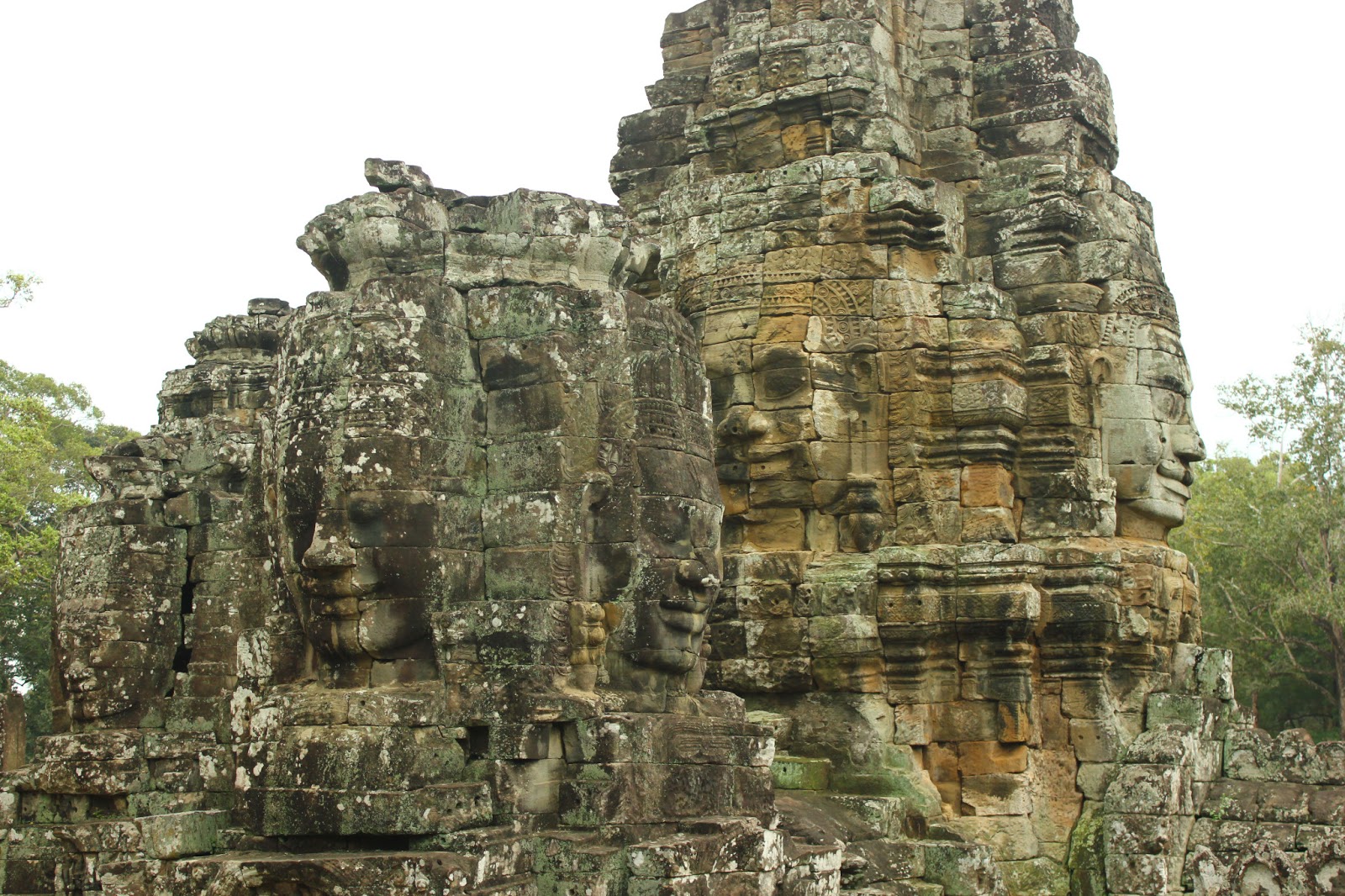
The Bayon temple.

The many faces of King Jayavarman VII depicted as the Buddhist boddhisttva of compassion - Avalokiteshvara.

Money

Strange thing, money. I’m still trying to figure out whether it’s the shackles or the key. Probably it’s both. On the one hand, it enabled me to undertake this mammoth journey, but on the other money was what led to me eventually returning home despite all my half jokes to friends about staying in Asia and joining a monastery. I actually contemplated doing that quite a bit, but decided that turning my life over to the care of an institution (even one so tangibly caring and ‘good’ as a Buddhist monastery) was not something I felt comfortable with. Plus my Laos/Vietnamese/Khmer language skills were pretty shitty. So I came home. But I did learn a few things about money, particularly charity.

The prevalence of beggars varied a lot between countries: in Laos, there were very few. At least in the western regions where I generally was, (the east suffered more from the effects of the Vietnam War as the two share a border there.) or maybe it was the ubiquity of the monastic system as a social welfare organisation. In Vietnam and Cambodia there are a lot of disabled people, as I’ve mentioned before. Being disabled in a developing country basically makes it extremely difficult to make money from any means other than begging. So what do you do? Whatever you have to I guess.

To be honest I’d never really given much money to charity back home but in these countries, where the loose change in your pocket can buy a few meals you’d have to be pretty cold hearted not to give out once in a while. The usual problem with giving money to beggars persists though: where does my money go? Does it go on food/clothing or drugs/alcohol?  My solution to the problem was to give as much as I could spare to as many people as possible, sure there would be some who didn’t spend it on food but a lot probably would. And how would I convince those who didn’t buy food/clothing to do so, when we didn’t speak the same language? How could I tell who did and who didn’t? Hence the non-discriminatory generosity. Bit of a cop-out maybe but there you have it.

That policy became more difficult when kids got involved. Saying no to a sad-eyed street kid asking for what equalled less than a pound was tough and people knew this so you saw that a lot, especially in Cambodia. But more often than not there would be an adult round the corner taking the kids earnings. Some of it probably trickled its way back down to them, but nowhere near what they got from you. This was especially saddening in Cambodia, which has a reasonable education system for one of the world’s poorest countries and one that more importantly, is free. The amount of times we came across kids on the street at night begging or selling trinkets was unreal. You ask them why they’re not at home in bed and you get blank stares in return. Truth is, some of these families are too poor to have any other choice. So you give them some money - its nothing to you but a lot for them - and hope it goes to something beneficial. That was the best solution I came up with; to go somewhere like that and give nothing is a travesty.

I mentioned I learned some things. I learned how unbelievably lucky we are to have some money. Would I like to live in a world that doesn’t revolve around money? Sure, but that’s out of the question. I moan about having to go to work and pay rent and taxes and blablabla, but at the back of my mind I always try to remember how fortunate we are to have the things that jobs/rent/taxes pay for even if it is a fucked up system. I also learnt that giving charity in developing countries is an ethical minefield. Unsatisfying conclusions to draw, but again there you have it. Discuss.